
What Are Full Mouth Dental Implants?
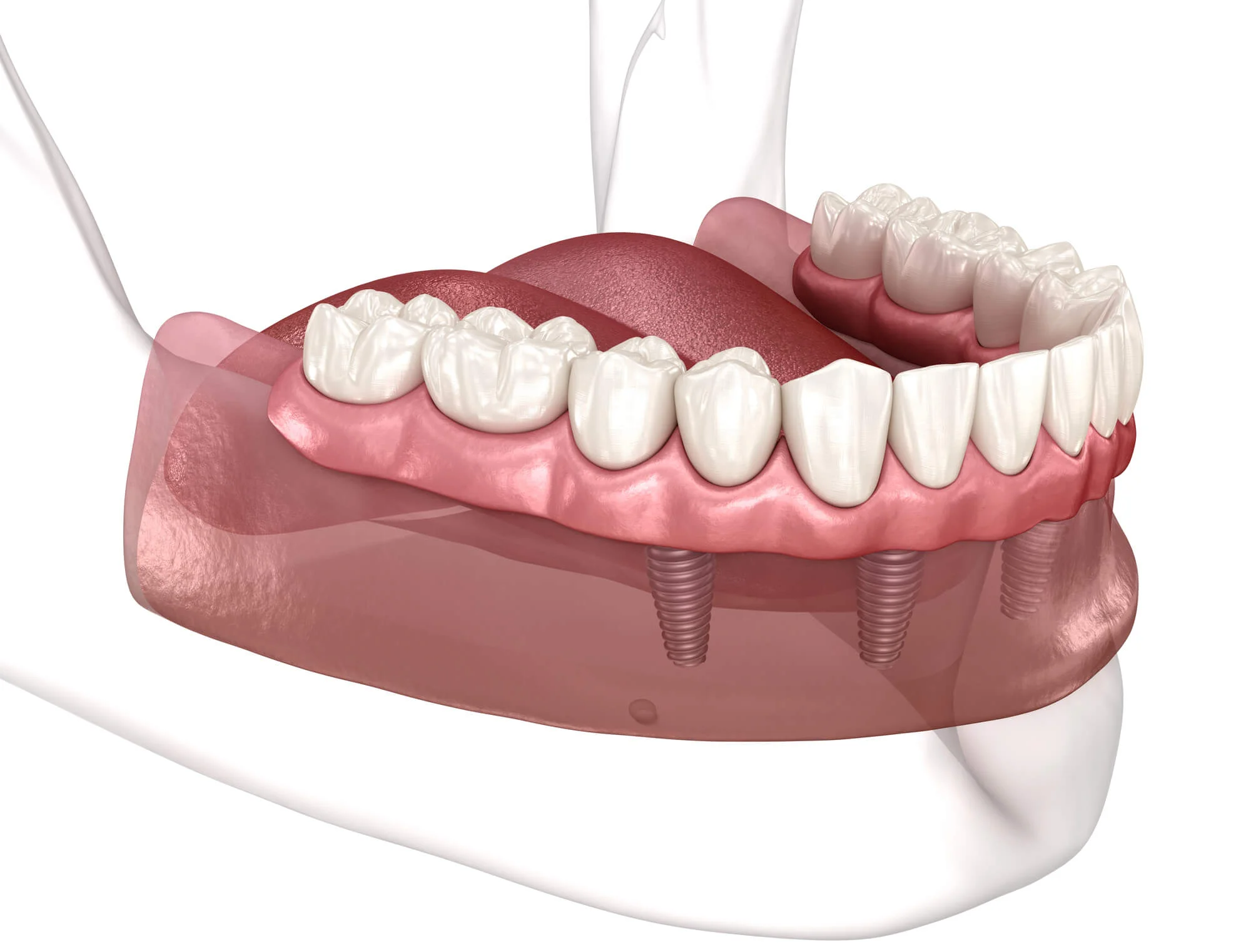
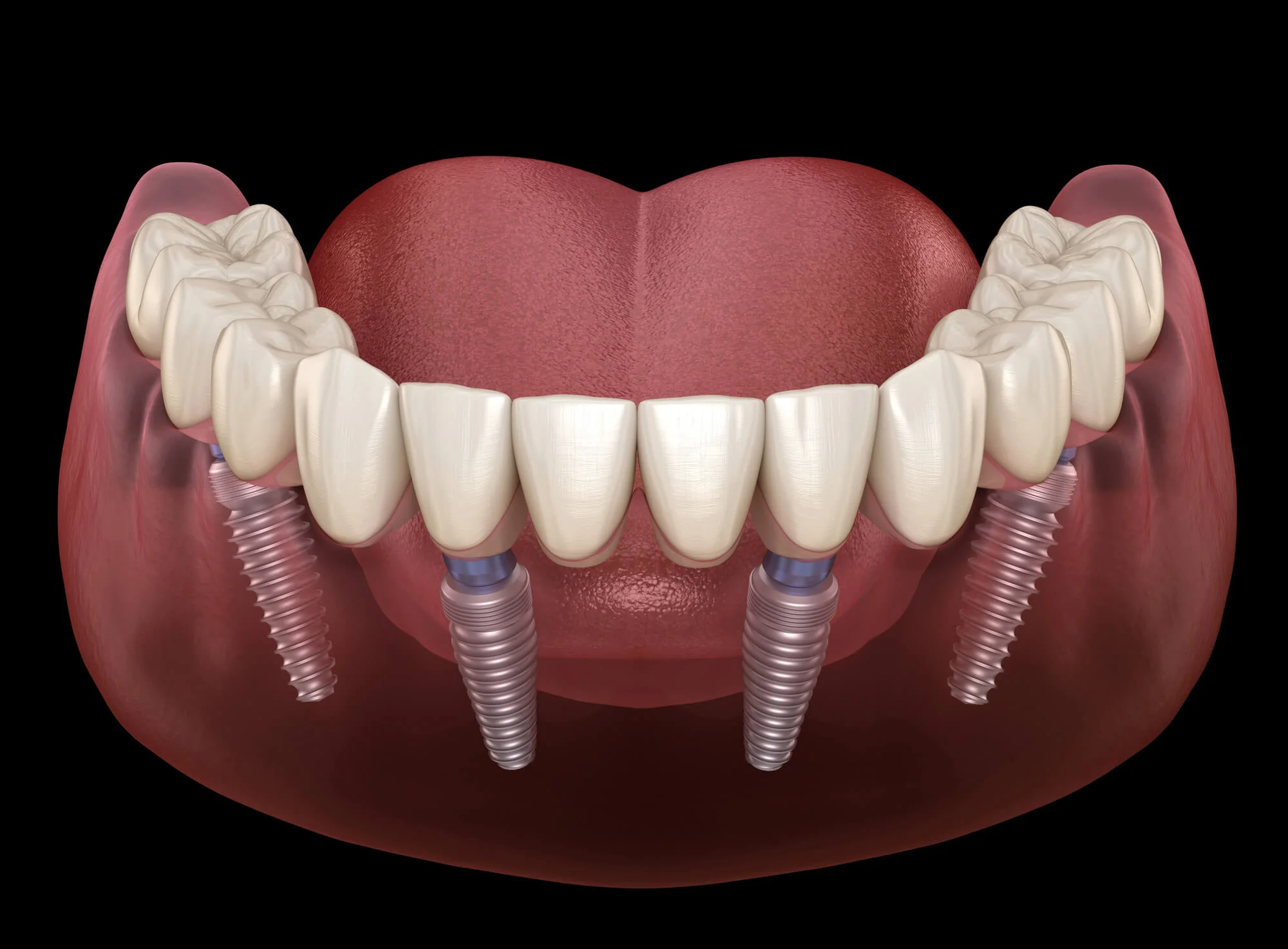
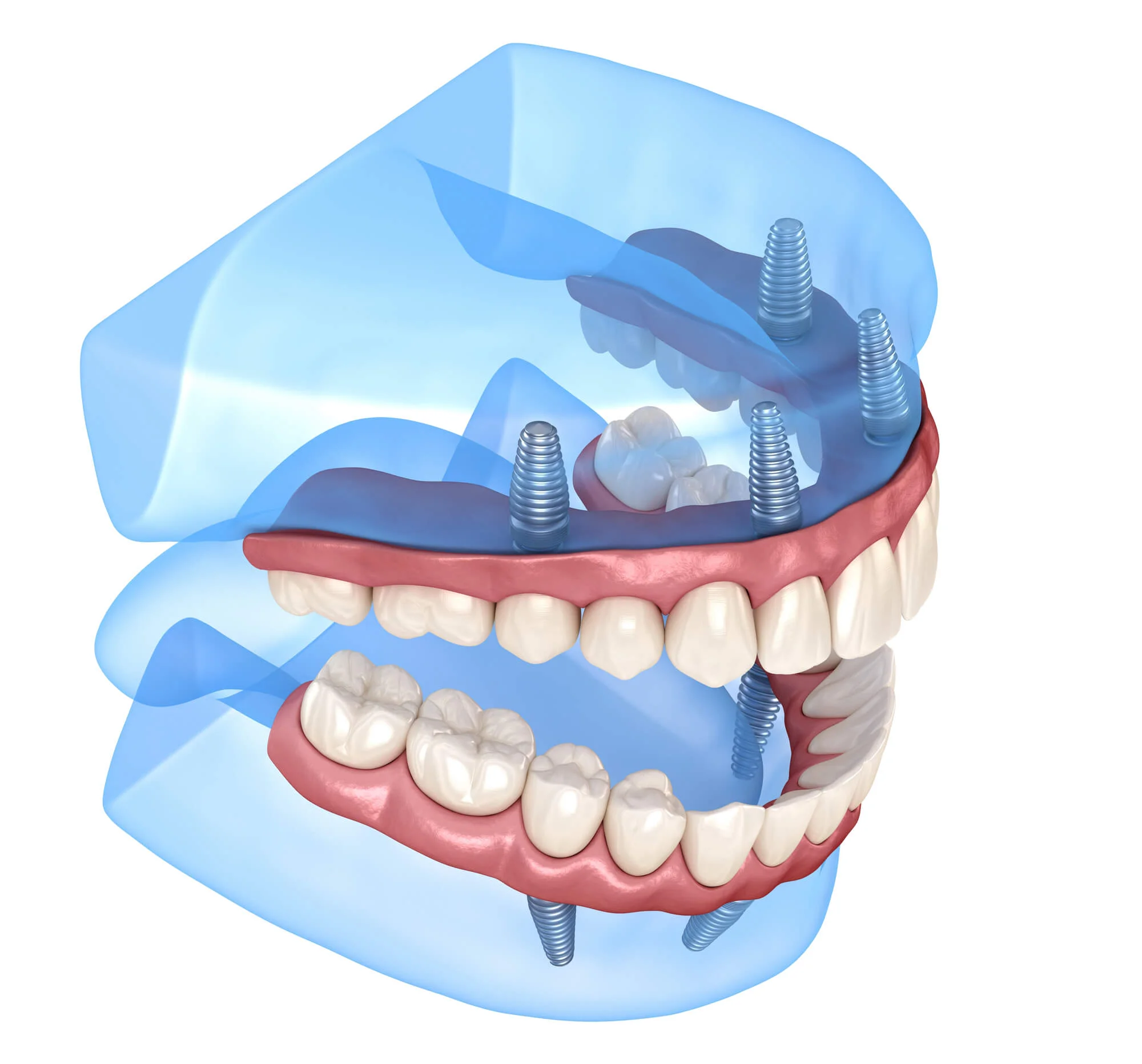
Full mouth dental implants involve placing multiple implants in the jaw to support a complete set of replacement teeth.
Rather than replacing each tooth individually, implants act as anchors for a full arch restoration. Depending on the treatment plan, this may include:
- Fixed full arch bridges
- Implant-supported dentures
- Hybrid restorations
These options are designed to improve stability and function compared to traditional removable appliances.
Full Mouth Dental Implants vs Dentures
Full mouth dental implants and traditional dentures differ in how they function and interact with the jaw.
Key differences include:
- Support: Implants are anchored in the jawbone, while dentures rest on the gums
- Function: Implant-supported restorations allow for more consistent chewing
- Bone structure: Implants help maintain jawbone volume over time
- Fit: Dentures may require adjustments as the jaw changes
Both options may be appropriate depending on oral health, preferences, and treatment goals.
Implant Supported Dentures vs Fixed Full Arch Implants
Full mouth implant treatment may involve either removable or fixed restorations.
Implant-Supported Dentures
- Attach securely to implants
- Can be removed for cleaning
- Provide increased stability compared to traditional dentures
Fixed Full Arch Implants
- Attached to implants and remain in place
- Designed to function similarly to natural teeth
- Do not require removal for daily cleaning
The most suitable option depends on clinical findings and patient preferences.
How Many Dental Implants Are Needed for a Full Mouth?
The number of implants required varies based on the treatment plan and bone structure.
In many cases:
- 4 to 6 implants per arch support a full set of teeth
- Strategic placement allows even distribution of bite forces
A detailed evaluation helps determine the appropriate number and positioning of implants.
Am I a Candidate for Full Mouth Dental Implants?
Eligibility for full mouth dental implants is determined through a comprehensive evaluation.
Factors considered include:
- Overall oral health
- Jawbone density and volume
- Gum condition
- Medical history
- Lifestyle factors such as smoking
If bone loss is present, procedures such as bone grafting may be recommended to prepare the jaw for implant placement.
Full Mouth Dental Implants Procedure and Timeline
Full mouth dental implant treatment is completed in stages.
Initial Consultation and Planning
- Digital imaging and scans
- Customized treatment plan
Implant Placement
- Surgical placement of implants in the jaw
- Healing period for integration with the bone
Final Restoration
- Placement of the prosthetic teeth
- Adjustments for comfort and function
The timeline varies depending on healing and any preparatory procedures required.
Recovery After Full Mouth Dental Implants
Recovery varies depending on the extent of treatment and individual healing.
Patients may experience:
- Mild swelling or discomfort
- Temporary dietary adjustments
- Gradual return to normal function
Aftercare instructions are provided to support healing throughout the process.
Bone Grafting for Full Mouth Dental Implants
Bone grafting may be recommended when the jawbone does not have enough density to support implants.
This procedure:
- Helps rebuild bone structure
- Supports implant stability
- Improves long-term treatment outcomes
Not all patients require bone grafting, but it may be part of the preparation process.
Full Mouth Dental Implants Cost and Financing Options
The cost of full mouth dental implants depends on several factors, including the number of implants, type of restoration, and any additional procedures.
Treatment may include:
- Diagnostic imaging
- Implant placement
- Bone grafting, if needed
- Final restoration
Flexible financing options are available through:
- PatientFi
- GreenSky®
- Third-party healthcare financing providers
These options allow patients to divide treatment costs into manageable monthly payments.
Full Mouth Dental Implants Before and After
Full mouth dental implant treatment is designed to restore both function and appearance.
Patients may notice improvements in:
- Chewing ability
- Speech clarity
- Facial support
- Overall comfort
Before and after evaluations help guide treatment planning and track progress over time.
Full Mouth Dental Implants Benefits and Risks
Full mouth dental implants involve both advantages and considerations.
Potential Benefits
- Improved stability and function
- Support for jawbone structure
- Long-term restorative option
Considerations
- Surgical procedure required
- Healing time needed
- Higher initial investment compared to some alternatives
Discussing these factors during consultation helps patients understand their options clearly.
Serving the Bethesda Community with Implant Dentistry
Patients across Bethesda and Montgomery County visit Bethesda Center for Family and Cosmetic Dentistry for implant care. The practice focuses on thoughtful planning, modern techniques, and personalized treatment that support long-term oral health.
Ready to Discuss Full Mouth Dental Implants?
Every patient’s needs are different, and a consultation provides the most accurate understanding of treatment options and associated costs.
Request a Consultation