

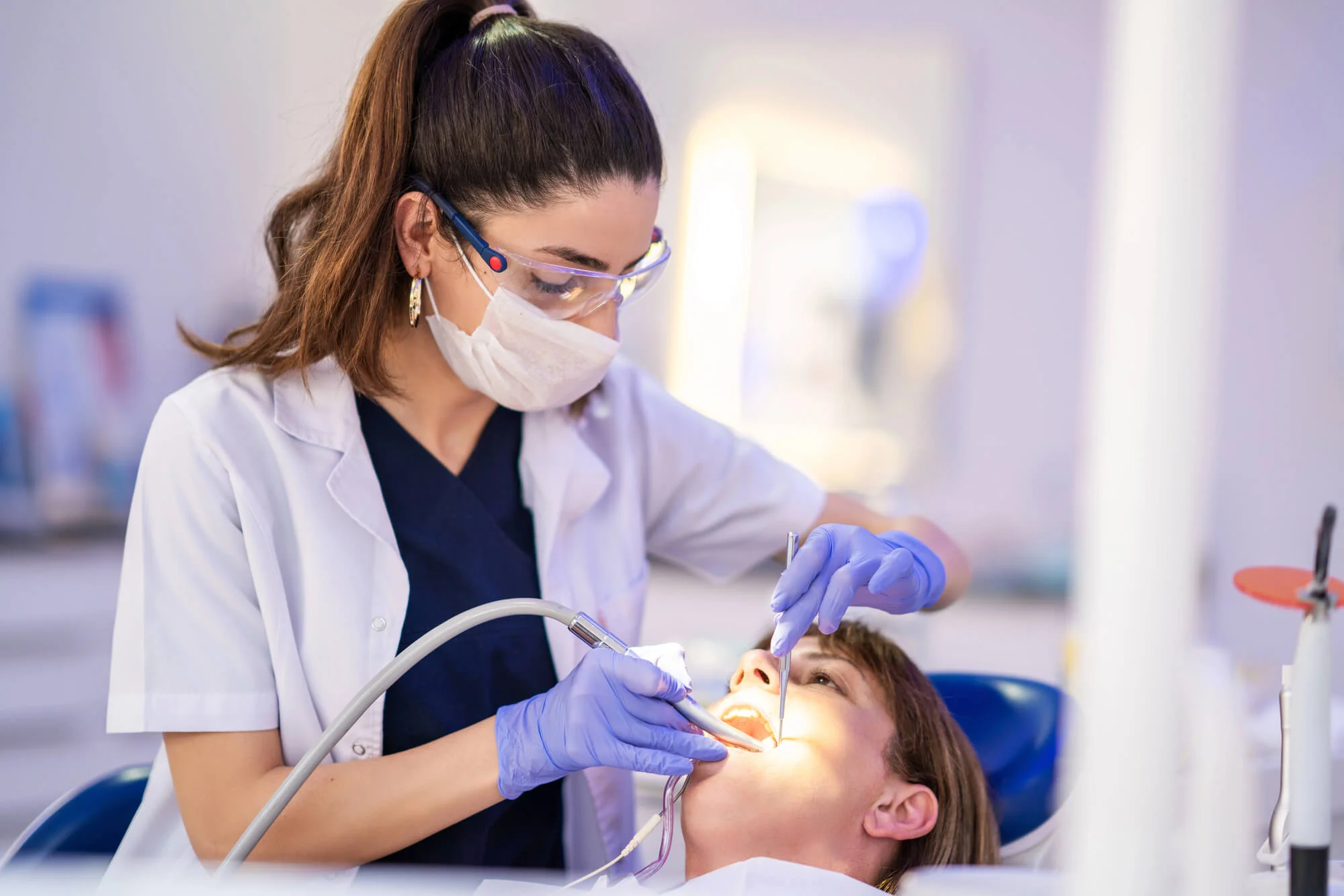
Whether it follows an injury, decay, or a tooth extraction, losing a tooth changes far more than the look of a smile. The empty space sets off a chain reaction that can reach neighboring teeth, the jawbone, and even facial shape.
Understanding those effects helps explain why so many patients consider dental implants in Bethesda rather than leaving the gap open. Here are six ways a single missing tooth can affect the entire mouth.

What Happens When a Tooth Goes Missing
1. The Jawbone Begins to Shrink
Tooth roots stimulate the jawbone every time someone bites or chews. Without that stimulation, the bone in the empty area gradually breaks down.
The American Dental Association notes that bone loss can occur around a missing tooth. The longer the gap stays open, the more bone may be lost.
2. Neighboring Teeth Start to Drift
Teeth rely on each other for support, much like books on a shelf. When one disappears, nearby teeth can tilt or slide into the open space.
The opposing tooth in the other jaw may also drift up or down. These shifts create new gaps and tight spots where plaque collects more easily.
3. The Bite Changes
Even small movements can throw off how the upper and lower teeth meet. An uneven bite may lead to jaw soreness, clicking, or headaches over time.
4. Remaining Teeth Work Harder
When one tooth is gone, the others pick up its share of chewing. That extra pressure can lead to:
- Worn or flattened enamel
- Chips and cracks
- Added stress on gums and supporting bone
Healthy gums matter here too, and periodontal care helps protect the teeth that remain.
5. Chewing and Speech Feel Different
A missing molar can make it harder to break down tough or crunchy foods. Many people start chewing on one side, which adds even more strain.
Gaps near the front of the mouth can also affect how certain sounds form. Words with “s” and “th” sounds are often the first to change.
6. Facial Features Can Change
As the jawbone shrinks, the lips and cheeks lose some of their natural support. According to Cleveland Clinic, jawbone shrinkage after tooth loss can create a sunken appearance.
This effect becomes more noticeable when several teeth are missing. For patients missing most or all of their teeth, full-mouth implants offer a fixed, complete restoration.
How Implants Help Stop the Chain Reaction
An implant is a small titanium post placed in the jaw to replace a tooth root. The ADA explains that bone grows around the post and holds it securely in place.
Once healed, the implant supports a crown, bridge, or denture that looks and functions like natural teeth. With proper care, implant restorations can last for decades.
Frequently Asked Questions About Replacing a Missing Tooth
Is It Too Late to Replace a Tooth Lost Years Ago?
Not necessarily, even if some bone loss has already occurred. Bone grafting can rebuild the area when the jaw lacks enough density to support an implant.
Who Is a Good Candidate for Implants?
Most healthy adults with missing teeth are candidates. A consultation reviews oral health, bone structure, and personal goals to confirm the best plan.

Explore Dental Implants in Bethesda Today
A missing tooth doesn’t have to change how someone eats, speaks, or smiles. If you’re considering dental implants in Bethesda, we invite you to book a consultation with Bethesda Center for Family and Cosmetic Dentistry today.